

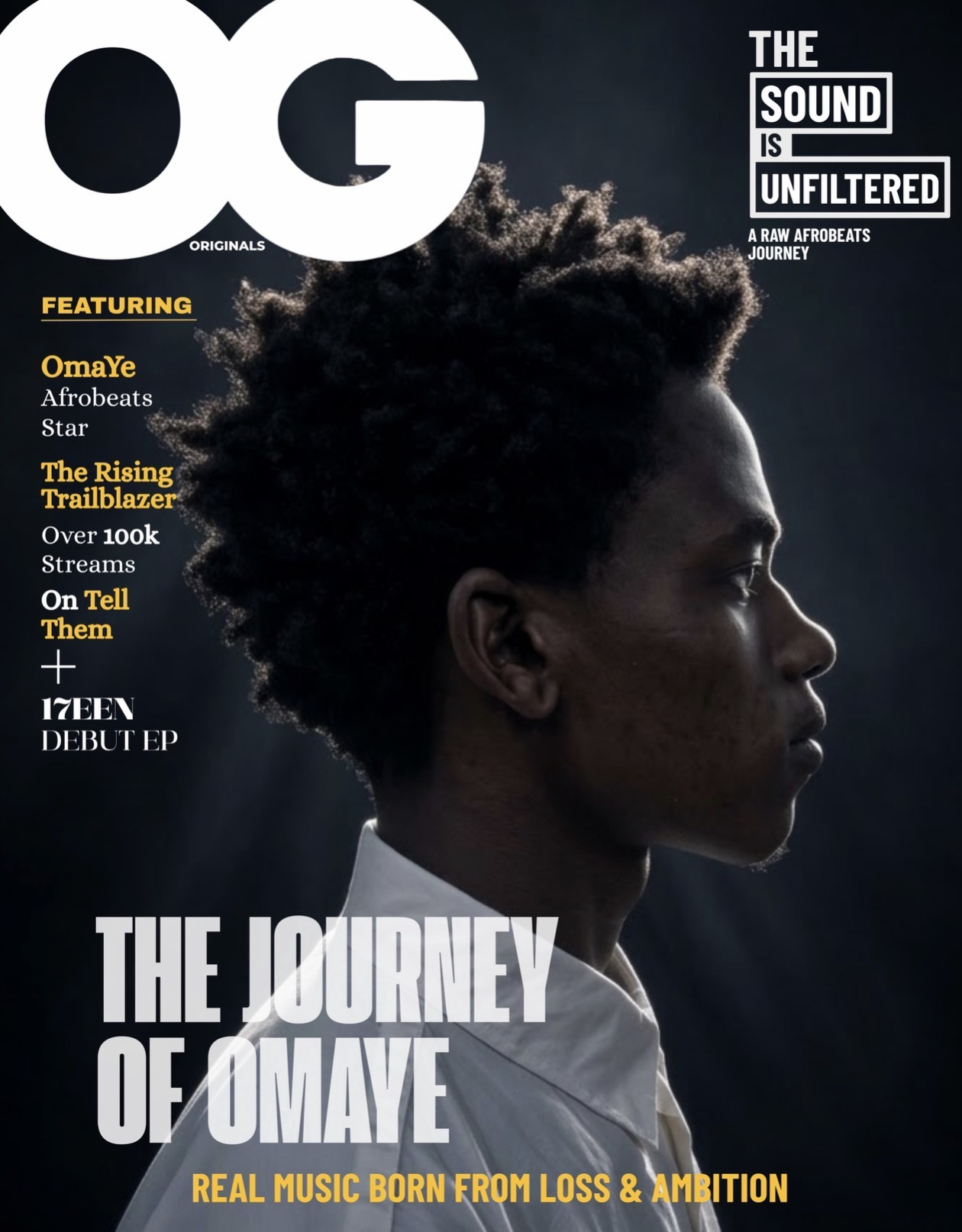
Some artists make music to be heard. Others use it to remember who they were, understand who they are, and document the person they are becoming. For OmaYe, the Abuja-based singer and songwriter born Jonathan Moses, music appears to serve all three purposes. His records are not simply milestones in a young career; they are fragments of a life still unfolding, shaped by loss, movement, ambition, and the process of discovering himself in real time.
Born on April 8, 2008, in Chikara, Kogi State, Nigeria, OmaYe experienced a childhood that would leave a lasting imprint on his perspective. He lost his mother at five, and later walked toward family near Abuja. That journey remains beneath the surface of his music, not as a story he needs to turn into a slogan, but as part of the personal history from which his writing emerges.
There is a difference between an artist who tells a story because it sounds compelling and one who understands that certain experiences never fully leave you. OmaYe’s approach seems closer to the latter. He is not presenting himself as someone who has already figured everything out. Instead, he is allowing listeners to witness the process: the setbacks, the questions, the changing perspective, and the gradual formation of an identity.
At an age when many artists are still working out what they want their sound to be, OmaYe is already building a catalogue that reflects where he has been and where he hopes to go.
Before the Studio, There Is a Feeling
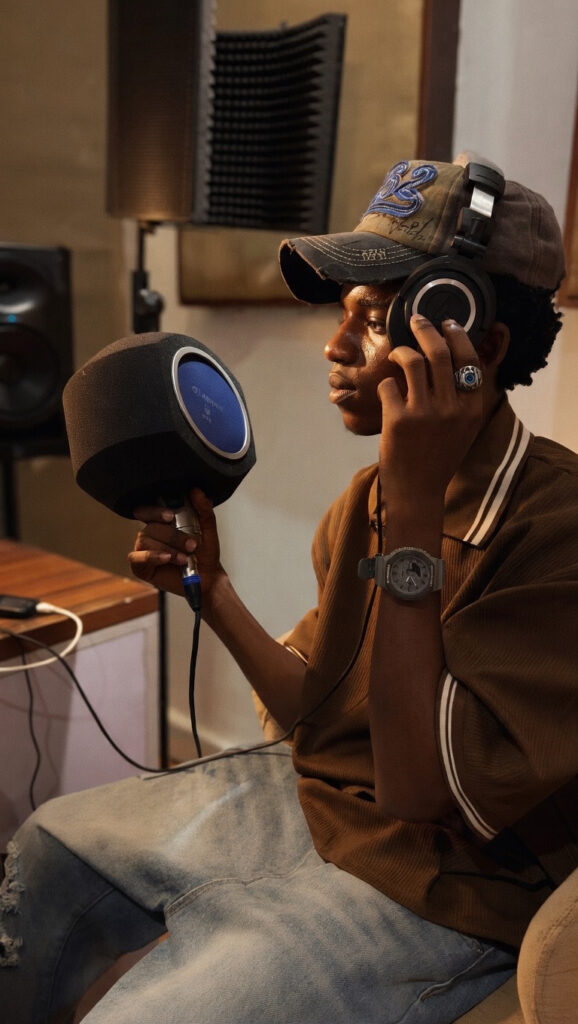
OmaYe’s creative process begins somewhere far less formal than a recording studio. His hooks often start as freestyles captured on his phone, preserving the first instinct before it can be overworked in the booth.
That detail offers a revealing look at his relationship with music. The initial idea is worth preserving because it carries something that can be difficult to recreate once a song becomes a more deliberate production. The immediacy matters. The unfiltered thought matters. And for an artist whose life is still changing, the ability to capture a feeling before it passes may be just as important as the finished record.
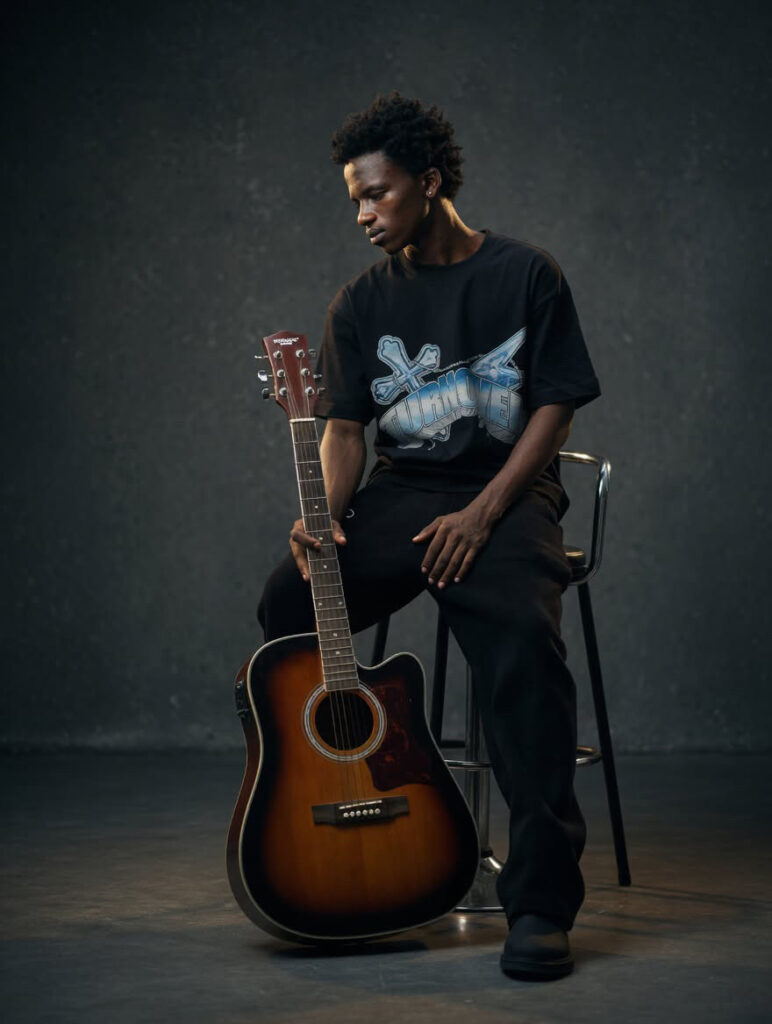
His approach also suggests a preference for discovery over excessive calculation. Rather than beginning with a fully formed statement, he allows ideas to arrive naturally, recording them while they still feel immediate. From there, the work of shaping a song can begin without entirely losing the energy that brought it to life.
That balance between instinct and intention runs through his developing career. OmaYe is working within Afrobeats, a genre with a powerful global presence, but his personal circumstances give his writing another dimension. The objective is not simply to make records that move a crowd. It is to create music that can carry something of the person behind the microphone.
The Early Records Were Only the Beginning
Signed to Lucky Lisiano Records, OmaYe began establishing his catalogue through releases including “Tell Them,” “Totori Dem,” and “NonFictional.” Each formed part of the foundation for what would become a more defined introduction to his world.
“Tell Them” became an important marker in that progression. Built around a message of trusting the process, the record surpassed 100,000 combined streams across Spotify, Apple Music, and Audiomack. Its reach extended through airplay, clubs, and DJ sets, allowing the song to find listeners before the arrival of his debut album.
The numbers tell one part of the story, but the timing is equally significant. “Tell Them” was gaining attention while OmaYe was still building the larger project that would introduce him to a wider audience. It offered a glimpse of his potential without defining the limits of what he could become.
On January 10, 2026, he released 17EEN, his freshman EP. The title carried the significance of a particular stage in life, but the project also represented a step in the development of an artist learning how to turn individual ideas into a body of work.
The next challenge was bigger: creating an album with its own identity, movement, and sense of direction.
Street Laws Is Built to Unfold
Released on July 24, 2026, Street Laws marked OmaYe’s debut album and a new stage in his artistic development. Rather than presenting the project as a collection of disconnected tracks, its sequence gives the listener a route through the material, beginning with “Intro” and moving through records including “Order,” “Alive,” “Understand,” and “Wanted.”
That structure matters. A tracklist can be more than a series of titles; it can establish pace, create contrast, and give a project a sense of progression. With Street Laws, OmaYe presents the album as something to experience in sequence, allowing each track to contribute to a broader listening journey.
The leading single, “No Fit Resign,” surpassed 5,000 combined streams within its first two weeks, adding another early indicator of interest around the release.
The album has also attracted coverage from Hip Hop Since 1987, BLK News, Entertainment Post, Melody Maker Magazine, and 4 The Culture, with attention extending across Nigeria, the United Kingdom, Germany, and the United States. That growing international visibility places OmaYe within a wider conversation about emerging African artists building audiences beyond their immediate surroundings.
Still, the more interesting question is not simply how far the music travels. It is what the artist learns while making it.
A debut album captures a particular version of its creator. It reflects the ideas, experiences, and limitations present at the time of recording. For OmaYe, Street Laws is both an introduction and a record of a moment in his life — one he will inevitably view differently as he continues to mature.
The People Behind the Sound
Although OmaYe’s story is personal, the music is not made in isolation. His work with producers PTD, Xavi, Choice D, MC Sameerah, and Strings2Mental has helped shape the catalogue, while collaborations with Emir Makhanaki and Stardon Globe have added other creative voices to the process.
Support from DJ Ivan in Kenya and DJ Khalifa in Abuja has also helped bring his records into different listening environments, from local audiences to listeners further afield.
These connections form part of the wider ecosystem around a developing artist. Behind each release is a network of creative decisions, relationships, and people who help move music from an initial idea toward a finished record and, eventually, an audience.
For OmaYe, that process is still taking shape. His catalogue is growing, his collaborators are contributing to an evolving sound, and his audience is discovering different sides of his work. There is no need to pretend that the journey is complete. Its unfinished nature is precisely what makes this stage interesting.
The Next Chapter Is Still Being Written
With his debut album released, OmaYe is preparing a run of new singles and official music videos as he moves into the next phase of his career. The focus now shifts from introducing Street Laws to continuing the conversation around it, giving listeners new ways to engage with the music while revealing what comes next.
For a young artist, that next phase brings a particular challenge. Early attention can create expectations before an identity has had time to fully settle. The temptation is to repeat what has worked, define oneself too narrowly, or behave as though every new release must prove something immediately.
OmaYe’s own outlook offers a different perspective. He understands that growth is part of the appeal, and that the person making the next record will not be exactly the same person who made the last one.
“I’m young. I’m still learning myself. That’s the best part of following this journey: you get to witness the growth.”
It is a straightforward statement, but it gets to the heart of his position. He is not asking listeners to see him as a finished product. He is inviting them to pay attention as he develops.
That willingness to leave room for change may ultimately become one of his most valuable qualities. His experiences will continue to shape his writing, his understanding of himself will evolve, and his sound may move in directions he cannot yet predict. The music will preserve pieces of that process along the way.
OmaYe’s story is therefore not only about a young Nigerian artist gaining streams, releasing an album, or attracting international press. It is about the relationship between lived experience and creative expression and what happens when an artist chooses to document that relationship rather than wait until the story feels complete.
He has already moved from early singles to 17EEN and Street Laws. Now, with new music on the horizon, he has another opportunity to show how far he has come and how much remains possible.
He is not asking the world to witness a finished story. He is giving it a reason to follow the next page.