
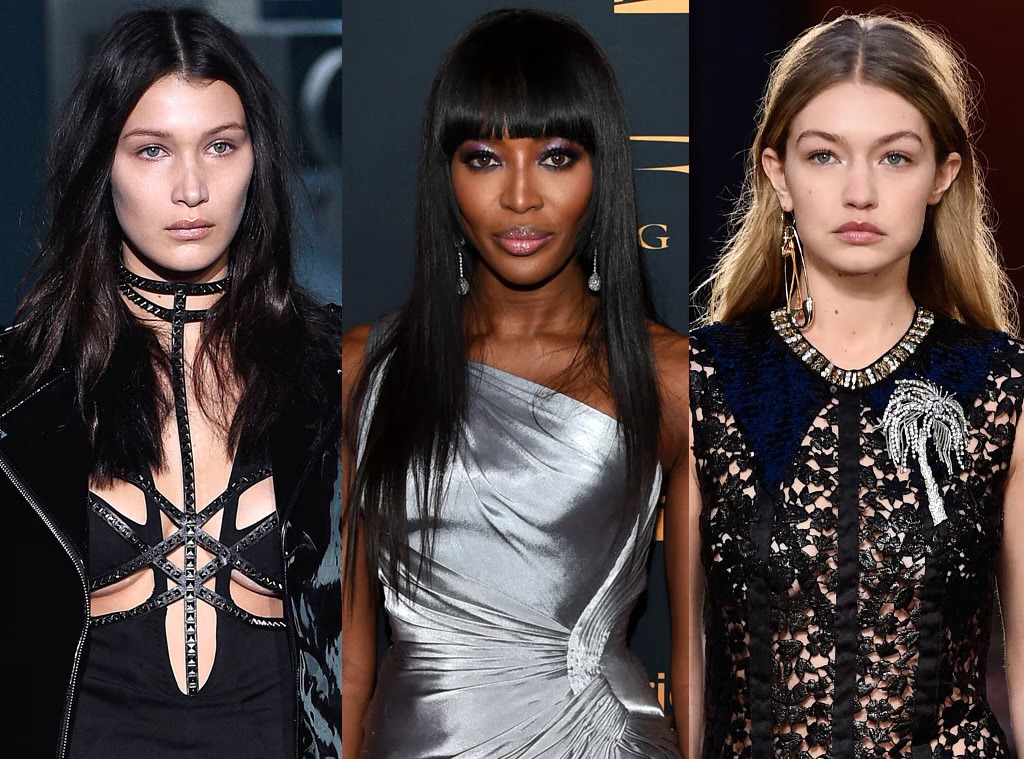
The supermodel once represented distance. In the 1990s, figures like Naomi Campbell, Cindy Crawford, and Linda Evangelista existed at the peak of controlled visibility—larger than life, yet carefully mediated through magazines, runway shows, and select campaigns.
Today, that model of fame has been fundamentally altered.
Naomi Campbell remains a constant reference point, not just for her legacy on the runway but for her continued presence across global fashion ecosystems. Her influence spans decades, proving that longevity in modeling is now tied to adaptability rather than reinvention alone.
The Hadid sisters, Gigi and Bella, represent a different evolution of the supermodel archetype. Their careers exist at the intersection of traditional high fashion and digital-era visibility. They move fluidly between runway shows for Versace, Prada, and Balmain, and a constant stream of online cultural presence that amplifies their influence beyond the catwalk.
What distinguishes this generation is not just recognition, but accessibility. The modern supermodel is no longer a distant figure seen only in campaigns and editorials. They are visible in real time, participating in culture as it unfolds rather than as it is archived.
Yet this visibility comes with a paradox. The more accessible the model becomes, the more important mystique becomes to maintaining cultural value. The industry now balances two competing forces: exposure and distance, presence and control.
In this tension lies the new definition of supermodel status.
Not just how widely they are seen—but how deliberately they are understood.